
The Evolution of Rubber Printer Rollers in Modern Printing Technology

Introduction
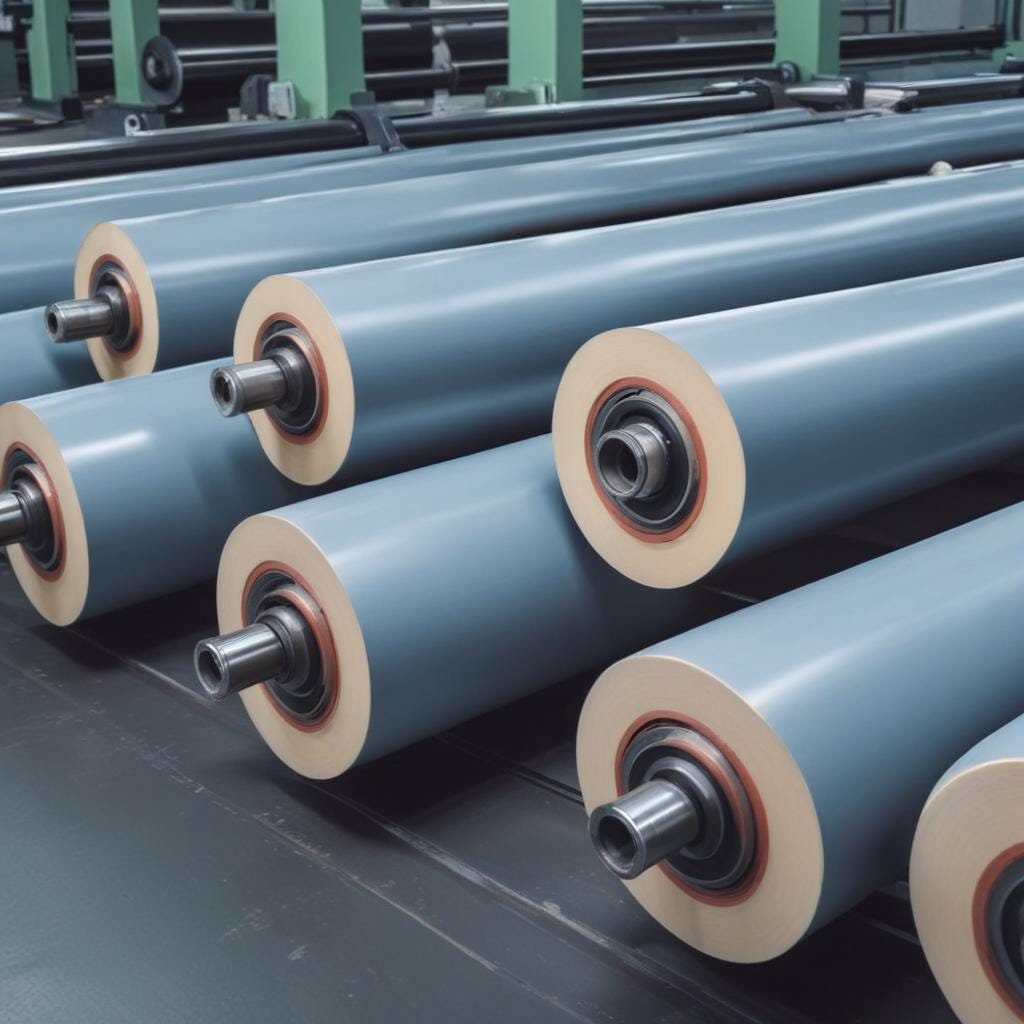
Through the years, the printing industry has developed rapidly with engineering breakthroughs that have enhanced productivity, product quality, and preservation of the environment. The rubber printer roller is one of the elements that play a key role in this process. Starting from their first creation and up to the contemporary delicate kind or rubber printer rollers, there have been marked transformations. In this blog, the journey of rubber printer rollers will be discussed based on material en), incorporation of precision engineering and environmental concern.
Early Beginnings of Rubber Printer Rollers
Originally, rollers were manufactured from wood and metals though these days different rubber materials are used in making them. The problems associated with such materials included rigidity and poor ink flow, which resulted in unreliable prints. One of them was the switching to the rubber material for the printer rollers. Flexibility was made possible by rubber as a material, and also the durability of rubber provided better ink adhesion which enhanced the printing process.
Material Innovation
Traditional Rubber
First of all, natural rubber was employed for use in printer rollers. This natural rubber proved to be more flexible, and offer better ink transfer as compared to the earlier counterparts. But, it included features like flexibility that was affected by heat, ozone, and solvents that caused wearing and degradation of the surface.
Synthetic Rubber Compounds
In order to overcome the above mentioned limitations synthetic rubber compounds were produced. Most of the well-known materials like nitrile rubber (NBR), ethylene propylene diene monomer (EPDM), silicone rubber, etc., came into use. These materials provided better protection against chemical, heat and the general environment and greatly improved the life and performance of printer rollers.
- Nitrile Rubber (NBR): It is famous for good resistance to oils and solvents which makes the product ideal for several industries.
- EPDM: Higher resistance to ozone, ultraviolet radiation as well as weathering makes the material good for use outdoors.
- Silicone Rubber: It has good thermal conductivity, and heat resistance which means that the devices will not fail in hi or low temp areas.
Advanced Composite Materials
Newer is the development of advanced composite that have been developed in the recent past by compounding the best of the rubber compounds. These composites offer the best performance, durability and efficiency that satisfy the high quality requirement in today’s printing technology.
Precision Engineering
Manufacturing Techniques
In this case, the process of manufacturing rubber printer rollers has changed. The previous approaches entailed physical effort and the use of simple tools, meaning that there were a lot of variations and mistakes. Techniques like CAD/CAM are used in the present day manufactures as tools for production rather than being mere names.
- Computer-Aided Design (CAD): Enables the design of the exact shape and size of printer rollers, without much abrasion, and to fit well.
- Computer-Aided Manufacturing (CAM): Saves time and cost and eliminates errors because of its enhancement of the speed of the production process.
Surface Treatment Technologies
Concurrent developments of surface treatment technologies of rubber printer rollers have also been realized. Pre-treatment methods like plasma treatment and corona treatment adequate to raise the surface energy of rubber so as to provide the necessary right for the ink to adhere and transfer on the substrate.
- Plasma Treatment: Causes changes on the surface of rubber, increasing the wetting effect of ink and the adhesion effect.
- Corona Treatment: Raises the surface energy of the rubber which increases its compatibility with the inks and/or coatings.
Environmental Impact
Sustainable Materials
Rubber printer rollers have been such a source of worry as far as the environment is concerned. The printing industry has tried to come up with sustainable material and ways of working in order to counter this. CONSUMER PRODUCTS: Biodegradable as well as recyclable rubber compounds are started to be used to minimize the effect of roller printers on the environment.
- Biodegradable Rubber: Self-splits over time making wastage and destruction of the surrounding environment to be minimal.
- Recyclable Rubber: In being recycled and used again this will help the circular economy and help to decrease reliance on basic materials.
Eco-Friendly Manufacturing Processes
The organization’s environmental policies have also been followed in the production processes. They help to reduce waste, energy consumption and the use of hazardous chemicals hence providing a better living environment, a sustainable environment.
- Energy-Efficient Machinery: Reduces energy usage and hence minimizes the amounts of greenhouse gasses released in the production process.
- Green Chemistry: Innovative chemical selection and operation methodology minimize emissions of hazardous chemicals to the surroundings.
Applications and Advancements in Modern Printing Technology
Various uses of rubber printer rollers are in the offset printer, digital printer, flexographic printer, and gravure printer. There are different application characteristics of the rubber rollers and these rollers are made in accordance with the specific conditions of the applications.
Offset Printing
In offset printing, the Rubber rollers are used for distributing inks from the plate to the newspapers. The rollers also have to come with a strong ink transfer characteristics and are heinous, particularly when it comes to the velocity of the printing encountered. Today’s rubber compounds impart high and even prints coupled with long roller durability.
Digital Printing
Digital printing process is very sensitive and needs accuracy in the working process. Rubber rollers implemented in digital printers are designed in a manner that allows them to be very fine in managing the distribution of ink in order to offer high resolution prints, rich in color.
Flexographic Printing
Flexographic printing employs elastic printing plates and rubber printing cylinders to print on different materials such as plastic and metal and paper. Due to its high flexibility and elasticity of the contemporary rubber rollers modern application of this printing technique is made possible.
Gravure Printing
Gravure printing works on the principle of sharp engraving of image to be printed on the surface of the cylinder and through the help of rubber rollers the ink is again taken up. The rollers should have very good ink transfer characteristics for high quality image reproduction. The appropriate performance and durability are achieved with the help of improved rubber compounds.
The Future of Rubber Printer Rollers
The last, Rubber printer rollers are still in the process of research and development and as such has the promise of a favorable future. Nanotechnology and smart materials are the technologies that one expects to result in further improvements. Such developments can be self-healing materials that can help the rollers to regain their functionality in case of slight damage. More so, linking up with IoT technology might be of great help when it comes to real-time tracking and predictive maintenance, which would help to eliminate unnecessary downtimes.
Conclusion
This shows the development path of rubber printer rollers:
the step from traditional material to modern, high-quality rubber is full of innovation. These constituents have been instrumental in defining the state of the printing technology right from the days of natural rubber to the modern day composite materials. Advanced in using precision engineering, development of materials, and emphasizing on sustainability has turned the rubber printer rollers into fundamental components of today’s printing industry. Rubber printer rollers will further evolve and continue to lead the industry even into the future contributing to the enhancement of print quality, productivity and sustainability.